
Restored in Roma
A Team to the Rescue

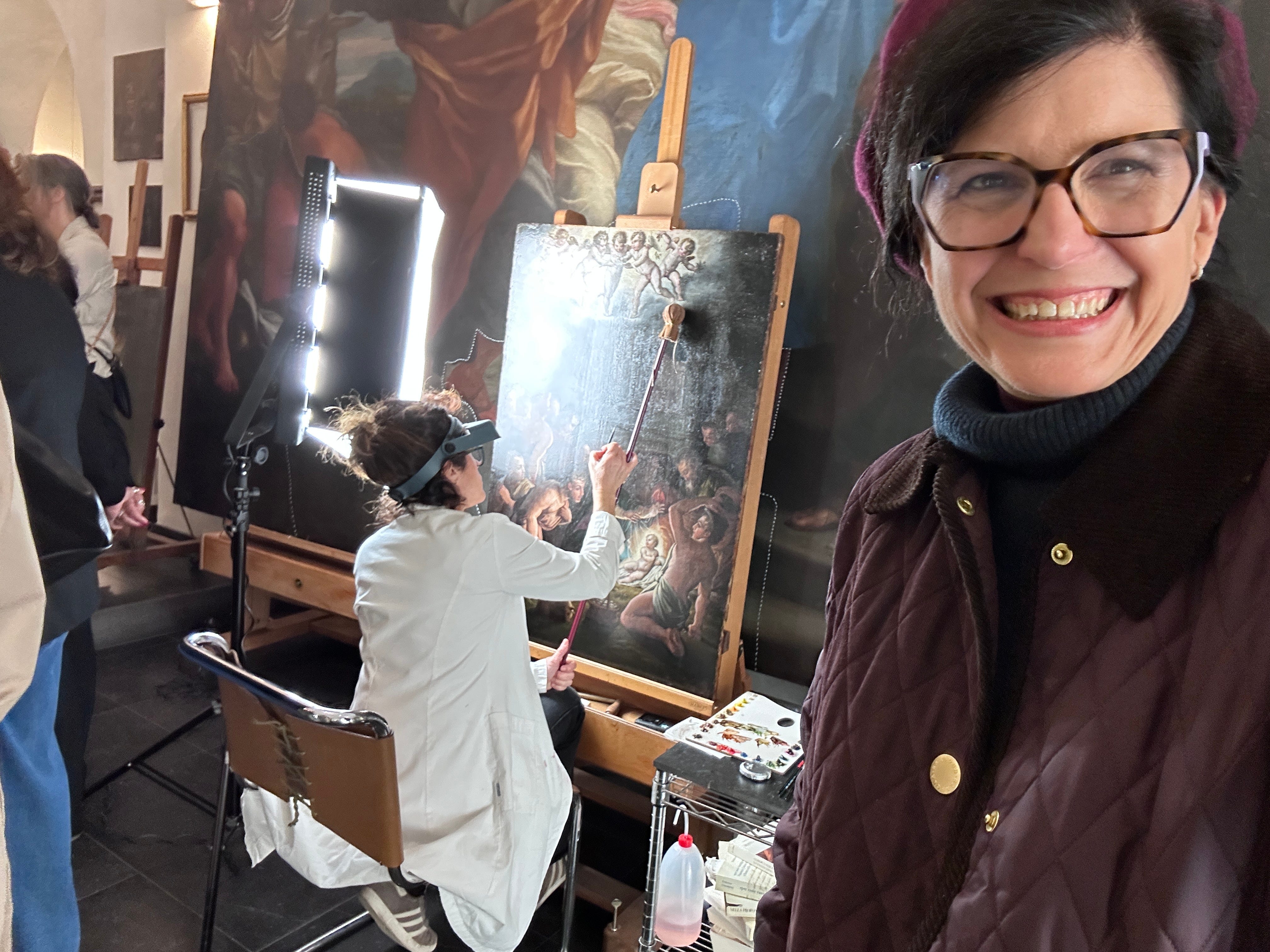
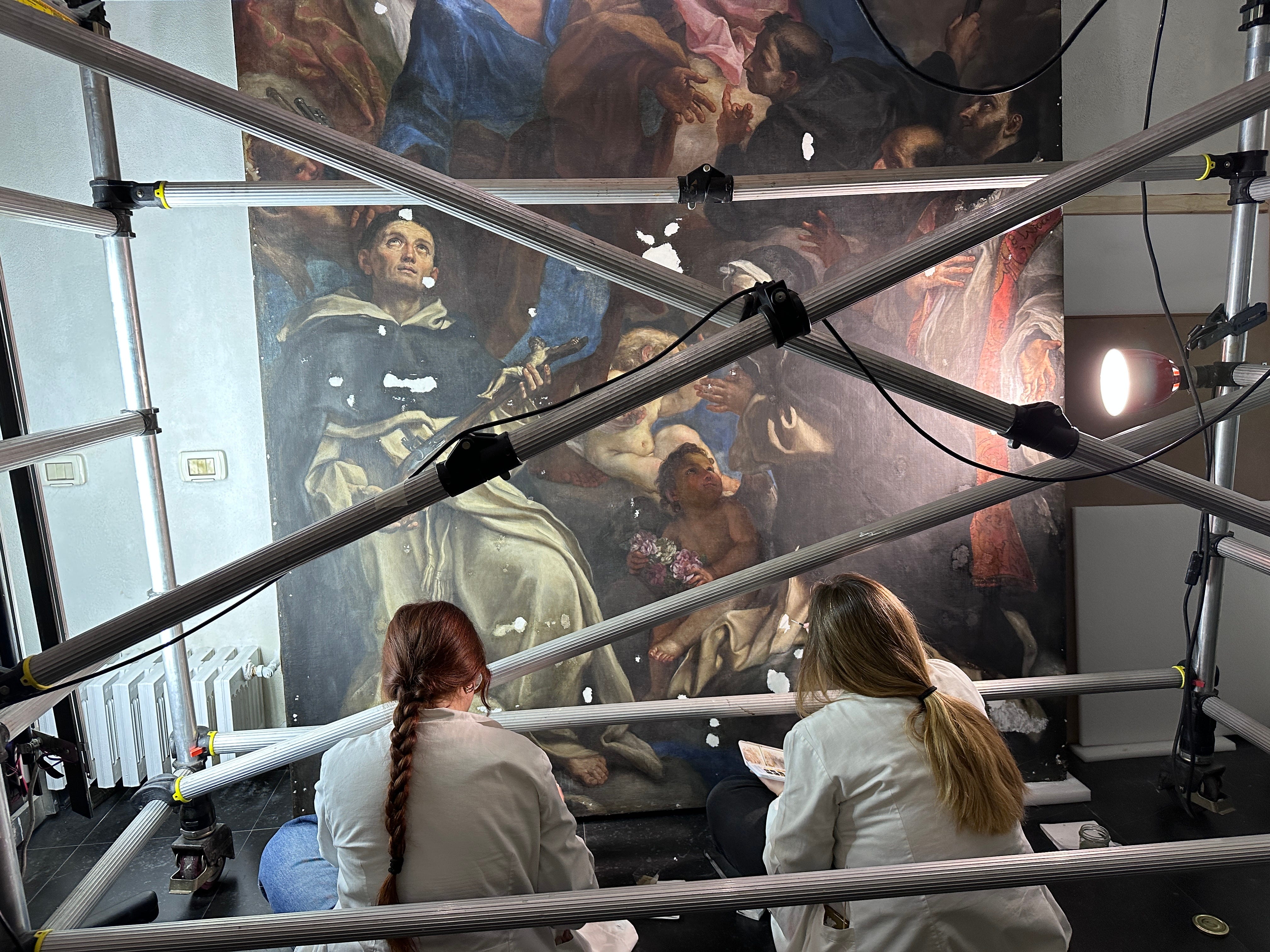
Renaissance paintings need to be rescued about once every century—or so I learned on a recent visit to the art restoration studio of Valeria Merlini and Daniela Storti in Rome. The Merlini–Storti studio has restored major works by Caravaggio, and pioneered the open‑restoration format in Rome; their workshop‑mentorship structure mirrors Renaissance workshops themselves.
I’d always imagined art restoration, like art itself, as a solitary pursuit. What struck me most by this visit was hearing Valeria describe the teamwork involved in restoring masterpieces. As a leadership scholar, I know how often breakthroughs depend on teams. But I had somehow preserved the illusion that art—especially the preservation of it—was the work of solitary genius.
Walking in, I noticed rows of apprentices—each perched on a low stool, faces illuminated by the violet glow of UV lamps—bent over the finest details of ancient paintings. Their hands moved with such delicacy that their wrists rested on a curious stick.
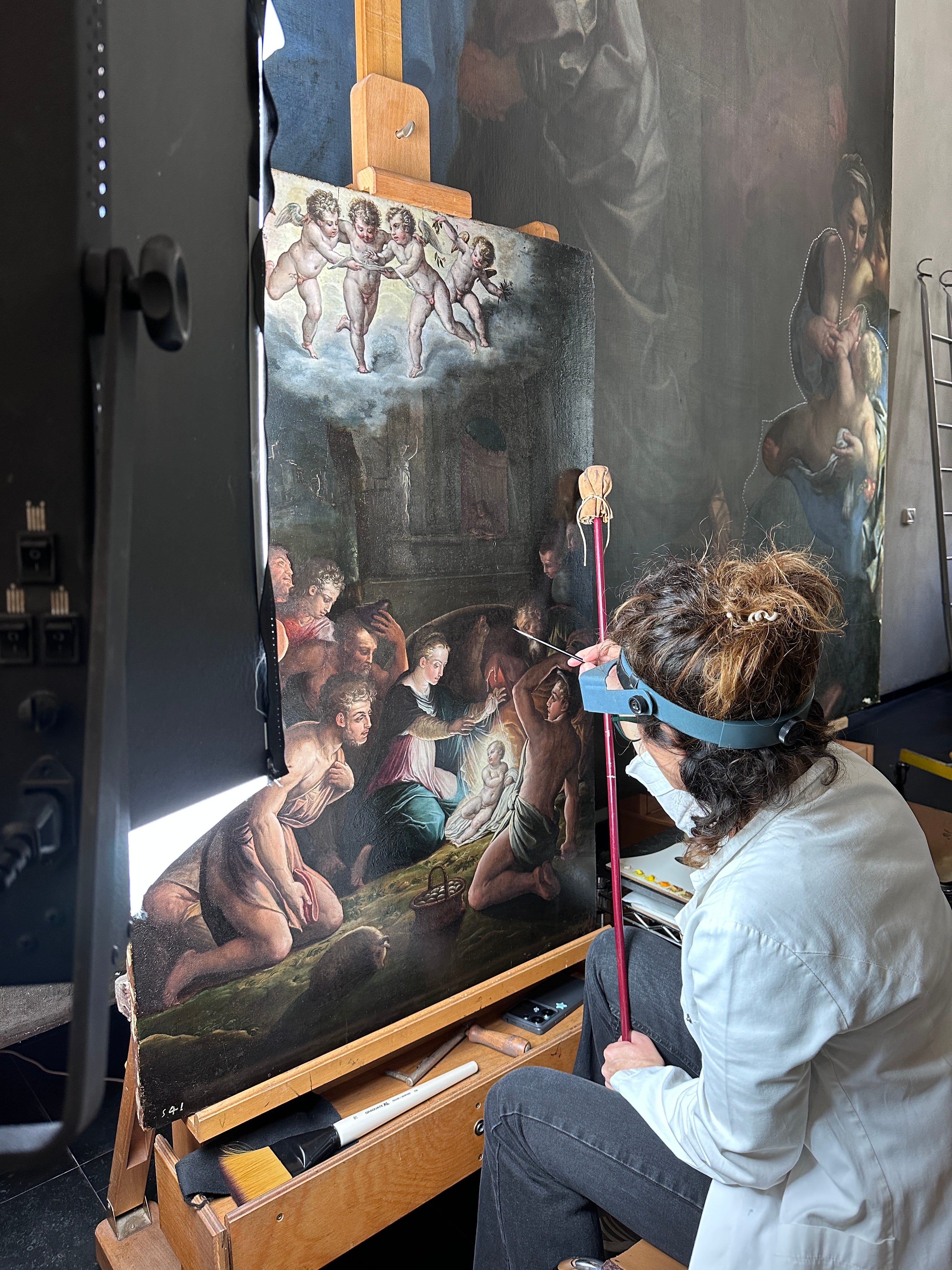
My recent foray into watercolor painting has taught me how easily one can smudge wet color. These restorers had an elegant solution: a long, slender stick with a soft, fabric-covered edge that rests lightly on the surface, steadying the painter’s hand just enough to prevent any stray touch. Later, I learned it has a name—the mahlstick—an essential tool that lets a hand hover mere millimeters above a centuries-old masterpiece without leaving a trace.
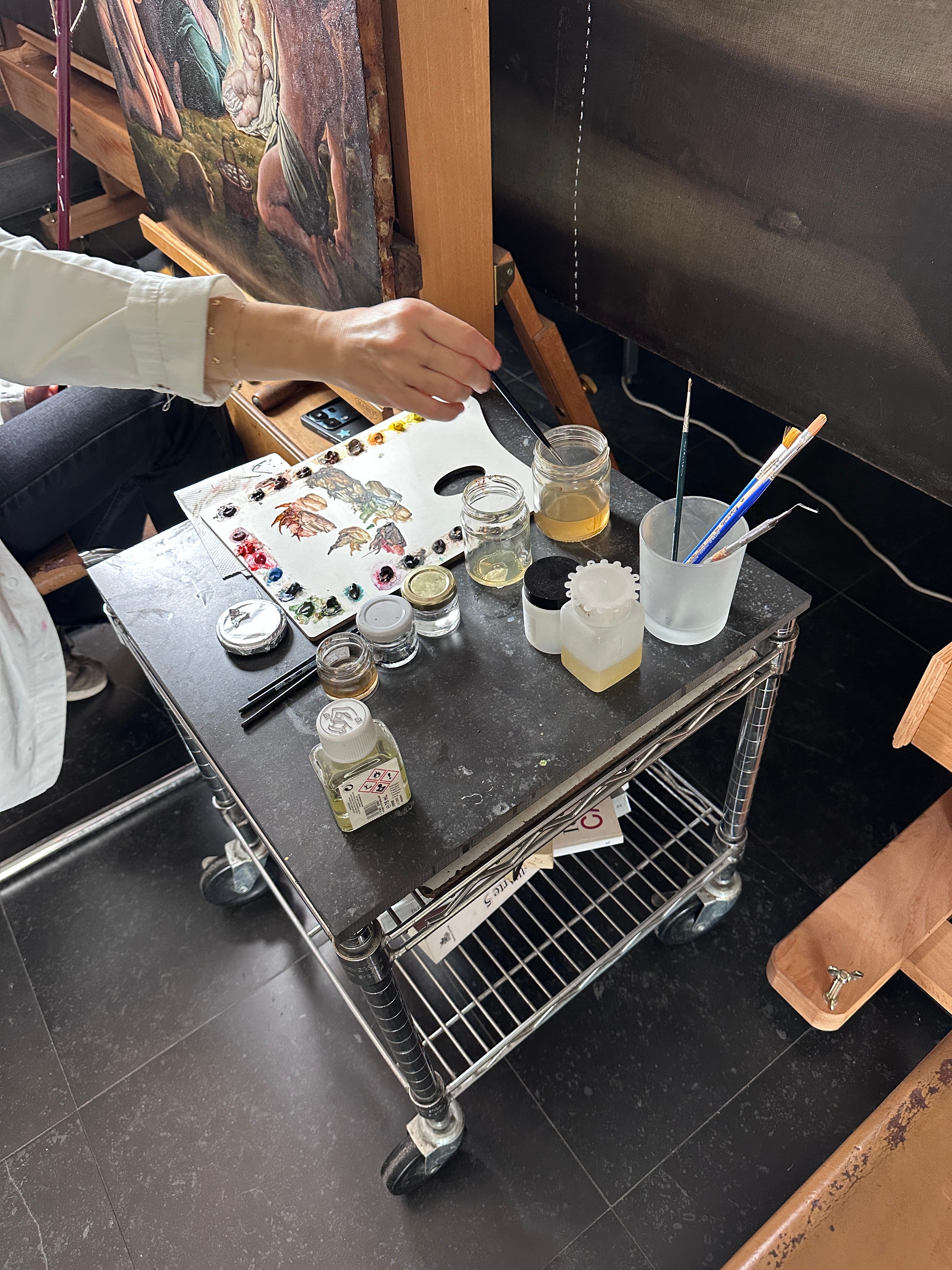
They wore lighted magnifying glasses and sat beside elegantly arranged trays of paints, brushes, and solvents.
Examining the carefully arranged trays, I imagined Sandro Botticelli or Giorgio Vasari might walk in at any moment. Vasari—“the Vasari”—painted the work in the photo just below. I felt dizzy realizing I stood this close to a painting by the original biographer of the grand masters.
Despite knowing how common teamwork is across fields, I had somehow preserved the illusion that art was one realm of solitary genius. I was wrong. Profoundly wrong.
In this workshop, two master restorers guided a small team of apprentices. When they encountered a puzzle—a pigment that behaved oddly, a crack that deepened unpredictably—Valeria smiled and said, “That’s when I call my teacher and ask.”
That was hardly the last mention of teamwork. In fact, it was the dominant theme of my visit. I learned that art restoration is never a solo act; it depends on a larger community of specialists whose expertise extends far beyond painting. Historians, chemists, and art scholars collaborate closely, bringing knowledge—and technologies—that unlock the secrets buried in centuries of varnish and pigment.
UV light reveals overpainting, varnish, and old repairs like a forensic autopsy. Infrared scans detect underdrawings—the original gestures hidden beneath layers of touch-ups and time.
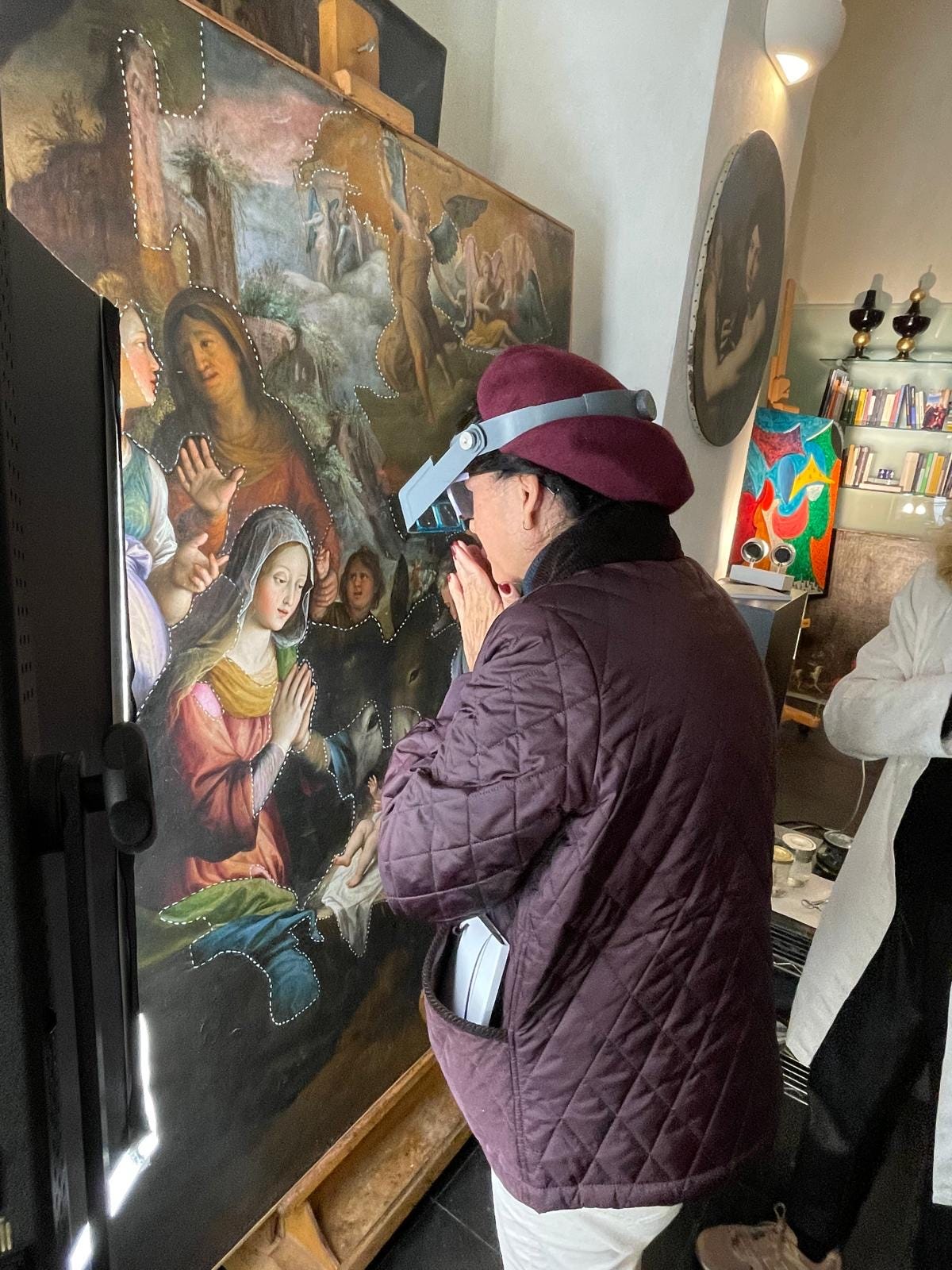
But what happens when those technologies reveal the artist’s own cover-ups? I asked. One apprentice quickly interjected: “The goal is to bring the painting to the point at which the master thought it was finished.”
It occurs to me that there’s an awful lot of mind reading in this trade. Not just of the artist, but of the restorers who came before—each with their own logic, their own determination of where to draw the line between reverence and revision.
Restorers are the unsung heroes of art history. Their names will never appear on a museum placard, nor will they know the names of those who came before them. No painting is ever captioned Mona Lisa, restored in 2025 by Alessia Mori. And yet, thanks to their invisible devotion, these masterworks endure to delight and inspire future generations.
Andiamo!
This was a really fun article Leslie! I knew about art restoration but didn't know anything about the process itself or all the work that went into it with so many people involved! Like you, I had this image of an elderly master, working diligently over a masterpiece into the night.
From the team perspective, I find myself fascinated by the mahlstick. I'm wondering what "mahlsticks" of sorts are used in other teams? Tools/perspectives that allow team members to either physically or mentally work with a guide and a support so that mistakes are minimized.
Anyway, looking forward to your next work of art! Enjoy your journey!