
Two Tigers and a Mountain
Insights from Romans and Martians on the perils of shared leadership


There’s an ancient Chinese saying: “One mountain cannot contain two tigers.”
I’ve been writing a lot this fall from Tuscany and Umbria. A tiny confession: before I fell in love with Renaissance Italy, I was seriously enamored with the ancient Romans. I studied Latin as my utterly useless foreign language in high school. Nothing against Latin, but I grew up in Florida. Spanish would have been wildly useful.
But I loved Latin class. A language we mostly learn through texts means a lot of reading. It also means, fast forward, so much agony trying to learn a spoken language like Italian while lacking any real muscle memory for hearing and speaking a foreign language. And I digress.
The reading in Latin class was bliss. Latin textbooks are chock-full of fascinating accounts of the larger-than-life personalities that have remained legend in an era decidedly prima di social media or even photography. Despite this, I have no difficulty imagining how inspiring a Julius Caesar speech must have been, or how unnerving it would have been to hear Nero laugh loudly at a dinner party.
Fortunately, these Romans left their mark all over the Italian peninsula. During these quiet December weeks in the Val d’Orcia, I kept noticing tourists stopping at one particular spot to take selfies, and I couldn’t figure out why. Turns out it was a filming location from the Gladiator movie. Clearly I’m not the only one still wondering what to make of those Romans.
When quirky professors wonder about things, we sometimes find concrete and systematic ways to pursue answers. That’s what I did with Alina, Noshir, and Megan in a paper we just published on leadership in Ancient Rome.
Back to the tigers on the mountain: the Chinese may have discovered what Roman emperors, NASA astronauts, and corporate co-CEOs have in common. They’ve all wrestled with the same puzzle: is two leaders better than one? And perhaps, all come upon the same answer.
Two is the most unstable number in leadership.
From Republic to Dictatorship
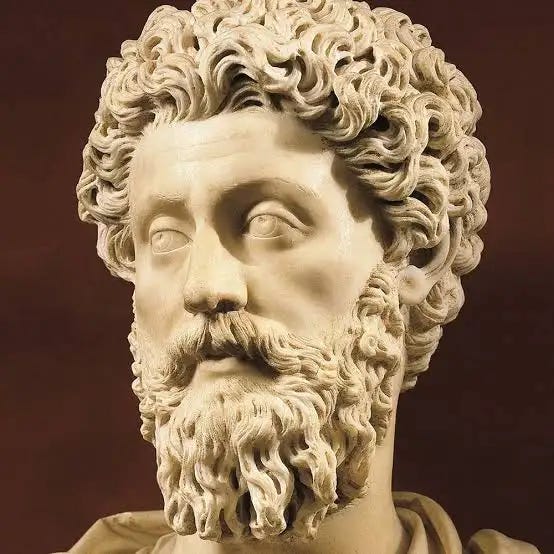
The Ancient Romans are remembered for their power struggles that played out in the grand theater of empire building. But among the violence and drama, there were the Five Good Emperors, the last of whom was a philosopher and a proponent of shared leadership: Marcus Aurelius.
In the early Republic, power rested with the Senate. Debate thrived, but efficiency did not. When a crisis loomed, such as an invasion or a rebellion, the Senate turned to a stopgap measure: a dictator. Dictators were appointed for emergencies, with a term set at six months, though they often stepped down sooner once the crisis passed.
Enter Julius Caesar. Charismatic, popular, and backed by the army. Caesar stretched the office beyond recognition. He was elected dictator multiple times—one year, then ten years—until, in 44 BCE, he was declared dictator for life.
The Senate bristled. Brutus, Cassius, and a group of conspirators assassinated him on the Ides of March, stabbing him 23 times during a Senate session. The result was not a restoration of the Republic but its final unraveling. Civil war followed, and from the ashes rose Rome’s first emperor: Augustus.
In our dataset there was a succession of 15 sole emperors, one after another. When one died, a new emperor emerged. And by “died” I mean in the broadest sense—death by murder, suicide, forced suicide, death by wife, or natural causes.
From Hierarchy to Heterarchy
After a long stretch of predominantly single-emperor rule, the pattern breaks in one of Rome’s most famous experiments in shared leadership. When Antoninus Pius died in 161 CE, Marcus Aurelius refused to rule alone and elevated Lucius Verus as co-emperor.
Shared rule was not unprecedented in Roman politics—earlier emperors had experimented with associates and successors—but this was among the most visible and consequential two-at-the-top arrangements of the imperial era.
On paper, the arrangement was shrewd. Marcus Aurelius, the philosopher, remained anchored in Rome, overseeing civil administration and imperial governance. Lucius Verus became the imperial face of the eastern campaigns, particularly the war against Parthia, delegating battlefield command to experienced generals. For nearly a decade, Rome functioned under this rare experiment in shared leadership. It worked pragmatically—but it never stabilized. When Lucius Verus died suddenly in 169 CE, Marcus ruled alone once again. Back to hierarchy.
Later Roman co-emperorships showed the same pattern—one partner ultimately dominated or the alliance fractured.
Shared Leadership
Shared leadership is having a renaissance, or rebirth, in modern organizations. Multiple group members collectively take responsibility for leading the group. Organizations ranging from Netflix to Deutsche Bank have experimented with it at the very top with co-CEOs.
Shared leadership leverages diverse perspectives, encourages creativity and innovation, and ensures members share responsibility for group success. At the same time, shared leadership can be slower as members deliberate their diverse perspectives. It can result in greater conflict and blurred lines of accountability.
Researchers have been studying shared leadership for over 30 years, and the results are unequivocally positive when it comes to all metrics but one: stability.
The co-CEO experiments rarely last. Most revert to a single leader within a few years. Even when the partnership seems to work, one leader typically ends up departing or taking a reduced role. The pattern repeats itself across industries and decades.
NASA Crews
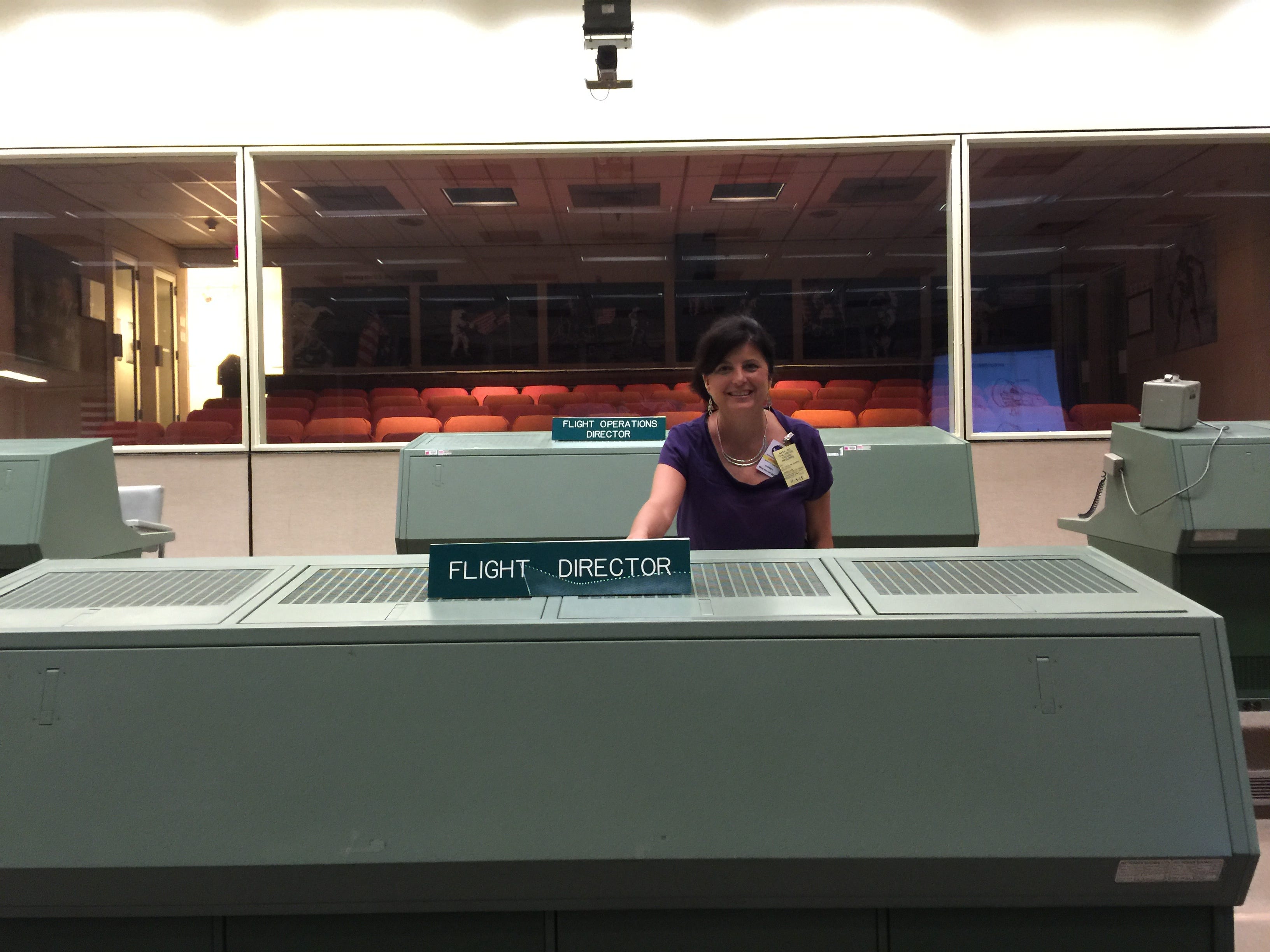
We first discovered this stability problem in NASA crews training for a mission to Mars. Mars missions will take about 3 years, if all goes well. The crew is the crew is the crew. Once the crew sets off, there will be no crew swaps or member replacements. The crew will be largely autonomous—no remote control from Earth, no instantaneous problem solving from mission command. The crew will face one-way communication delays up to ~22 minutes, depending on where Earth and Mars are in their orbits.
We’ve been studying what NASA calls analog space crews—teams that live and work in Mars-like conditions here on Earth, isolated and autonomous, so we know what to expect when the real mission launches. I’m most interested in how we can have 100% certainty the team will function well. For 3 years. I don’t know any team on Earth who can, with 100% certainty, perform well for one day let alone 1,000. That’s what makes the research so interesting, and important.
The Star Wars and Star Trek series aren’t about physics failures. They’re about interpersonal dynamics. Conflict, cooperation, competition, good versus evil. That’s not an accident.
Not that rocket science is easy, but teamwork is rocket science too.
Having studied a lot of these crews, and observing their leadership dynamics across 30 or 45 days, the first thing we noticed is that they share leadership more often than not. Makes sense. They have different expertise, the mission is long. Why not take turns, or contribute differently, all pitch in to make the team work?
The second thing we noticed caught us off guard. When we looked closer at the leadership transitions, we noticed that overall, leadership is pretty stable. If there’s a single crew leader at one time, the next time we look, we most often find a single leader. Same thing if there were 3 or 4 members leading.
The only time that didn’t happen was with exactly two leaders. When the crew had two leaders, it was anyone’s guess what would happen next.
Two leaders is more of a transition state. It’s a fork in the road, with two paths ahead: hierarchy or group leadership.
Fascinating.
Roman Emperors
We observed this pattern across NASA crews, across years, across habitats. The two-leader instability was consistent and undeniable. But we needed to test it in a radically different context—something with a much longer time horizon and completely different stakes. Where else can we observe leadership transitions over centuries?
In a context where succession was contested and variable—sometimes hereditary, sometimes adoptive, sometimes enforced by military acclamation—creating a long-run record of leadership turnover and shared-rule episodes.
Ancient Rome.
So that’s what we did. We tracked down historical accounts of Roman Emperors from 27 BCE to 491 CE. We ran the same analysis on the Emperors that we did on the NASA crews. We found the exact same thing. Two leaders was a passing phase, not a stable arrangement.
Hierarchy, Heterarchy, and Dyads
Hierarchies are stable. One leader replaces another. Heterarchies are stable too: once people expect multiple leaders, that system can persist even as it faces changes in who leads. But when there are exactly two, stability ends. Rome fell into it. NASA crews reveal it. Modern companies flirt with it. Two may sound balanced, but in leadership, it’s the most unstable number of all.
With two leaders, power often tilts one way or the other, or fractures into conflict, because there’s no natural tiebreaker and no systemic expectation for how two should share.
Here’s the paradox. In twenty years of studying teams of teams, the most unstable structure I’ve seen isn’t complexity—it’s exactly two teams. Product design and sales. Hospital operations and patient care. Finance and legal. When only two teams must coordinate, every difference collapses into a binary: speed versus quality, growth versus risk, efficiency versus care.
With no third team, there’s no redundancy in sensemaking, no broker to translate across logics, no pressure valve when tension rises. The dyad hardens into “us versus them.” Add a third team—strategy, integration, quality—and something structural shifts. Disagreement becomes triangulated, not personalized. Coordination becomes possible.
The lesson is simple but counterintuitive: two-team systems don’t fail because people can’t collaborate—they fail because dyads are structurally brittle.
You can imagine my reaction a few years ago as an academic department head when I was presented with a plan to reorganize into two teams. “Two tigers on a mountain,” I thought.
Co-CEOs, co-chairs, even political duos: two can look elegant on paper, but in practice it’s the hardest number to sustain. So the next time you find yourself on a mountain with another tiger, be prepared to enlist a third — history suggests the alternative rarely ends well.
Andiamo.

Our leadership best practices featured in KelloggInsight:
https://insight.kellogg.northwestern.edu/article/houston-we-have-a-solution
Read the full article here:
DeChurch, L., Lungeanu, A., Chan, M., & Contractor, N. (in press). When two is too many and not enough: Discoveries on the stability of shared leadership from Rome to Mars. Academy of Management Discoveries.
More on leadership on a Mars mission:
Lungeanu, A., DeChurch, L., Chan, M., & Contractor, N. (2025). Leading the crew to Mars: Evidence from NASA HERA analog crews. Acta Astronautica.
More on “teams of teams”:
Luciano, M. M., DeChurch, L. A., & Mathieu, J. E. (2018). Multiteam systems: A structural framework and meso-theory of system functioning. Journal of Management, 44(3), 1065-1096.